


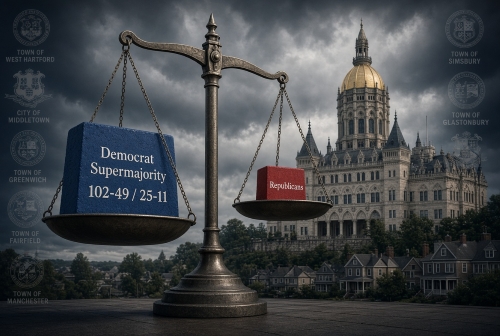
This political season, Connecticut voters are hearing a great deal about affordability, taxes, housing and the loss of local control. But progress on many of these issues will remain difficult so long as a more fundamental problem goes unaddressed: The extraordinary concentration of political power in Hartford.
Democrats currently hold 102 of the 151 seats in the House of Representatives, compared with 49 Republicans, and 25 of the 36 seats in the Senate, compared with 11 Republicans. They therefore hold more than the two-thirds majority required to override a gubernatorial veto in both chambers.
This November, voters will elect all 151 members of the State House and all 36 members of the State Senate. The outcome matters greatly to Greenwich.
That degree of one-party control should concern taxpayers regardless of political affiliation. Healthy government requires competition, accountability and meaningful checks and balances. When one party has overwhelming control, there is less need for compromise and less ability for the minority party to influence legislation.
For Greenwich, there is another particularly important concern: local control.
Increasingly, decisions traditionally made by Connecticut's towns are being debated in Hartford. Housing and zoning provide a clear example. During the 2026 legislative session, proposals sought to restrict municipal authority over such matters as minimum lot sizes, setbacks, lot coverage and permissible housing types.
Greenwich is not Hartford, Bridgeport or New Haven. Connecticut's 169 municipalities differ enormously in density, infrastructure, schools, finances and community character. Decisions affecting Greenwich neighborhoods, zoning, schools and local expenditures should, whenever practical, be made by local residents and officials accountable to them—not through one-size-fits-all mandates from Hartford.
The issue is not whether every Democrat proposal is wrong or every Republican proposal is right. It is whether Connecticut is well served when one party possesses such overwhelming power that the other has too little ability to provide an effective check.
Electing more Republicans to the General Assembly would restore greater political balance. It would encourage more debate and compromise, strengthen scrutiny of taxes, spending and regulation, and provide a stronger defense of local decision-making.
Connecticut needs greater accountability in Hartford and greater respect for local control. A more balanced General Assembly would be an important step toward achieving both.
Read: How Connecticut’s Democrat Supermajority Clears the Path for Socialism


